Causes of Sciatica
Sciatica is a symptom, not a standalone disease. In this section, we explore the underlying structural issues—such as herniated discs and spinal stenosis—as well as lifestyle factors and conditions that can trigger or exacerbate sciatic nerve pain.
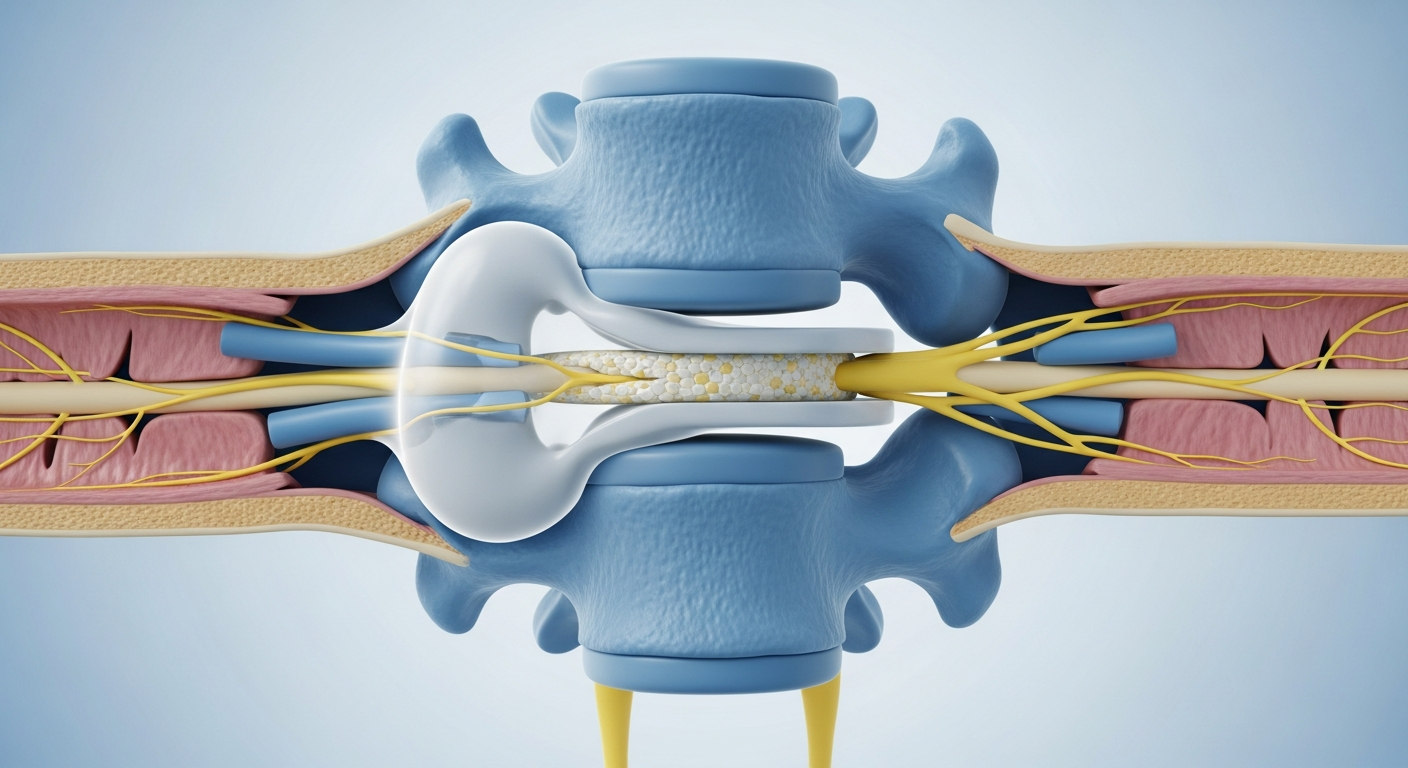
A herniated disc is the leading cause of sciatica. Understand how disc herniation compresses the sciatic nerve.
How the narrowing of the spinal canal can compress sciatic nerve roots and cause radiating leg pain.
How the natural wear and tear of spinal discs over time can lead to sciatic nerve irritation and chronic pain.
Why expectant mothers often experience sciatic pain and safe management strategies during pregnancy.
How age impacts spinal health and increases the risk of developing sciatica through structural changes.
The connection between excess body weight, spinal stress, and increased risk for sciatic nerve compression.
How diabetes increases the risk of nerve damage and its relationship to sciatic nerve pain.
Understand how smoking accelerates spinal degeneration and increases your risk of developing sciatica.
When the piriformis muscle spasms and compresses the sciatic nerve, mimicking true sciatica.
How poor lifting mechanics and occupational hazards can trigger sudden or chronic sciatic nerve pain.
The impact of a sedentary lifestyle and prolonged sitting on spinal health and sciatic nerve pressure.
How athletic activities and sports-related injuries can lead to acute sciatica flare-ups.
Exploring the mind-body connection: how psychological stress can exacerbate sciatica symptoms.
Explore More in Sciatica Causes
- →Herniated Discs and Sciatica
- →Lumbar Spinal Stenosis
- →Degenerative Disc Disease
- →Pregnancy and Sciatica
- →Age-Related Sciatica
- →Obesity and Sciatica
- →Diabetes and Sciatica Risk
- →Smoking and Sciatica
- →Muscle Spasms and Piriformis Syndrome
- →Heavy Lifting and Sciatica
- →Prolonged Sitting and Sciatica
- →Sports Injuries and Sciatica
- →Stress and Sciatica