Learn more in our complete guide: Explore all Causes sciatica resources →
Medical Disclaimer
Herniated Discs and Sciatica: The Leading Cause Explained
Key Takeaways
- A herniated disc is the number one cause of sciatica, accounting for up to 90% of cases.
- It occurs when the soft inner core of a spinal disc leaks through its tough outer layer.
- The leaked material physically compresses the sciatic nerve root and releases inflammatory chemicals.
- Most herniated discs heal without surgery within several weeks to months.
When patients are diagnosed with sciatica, the conversation almost immediately turns to the spine. Specifically, doctors will often look for a herniated disc. Also commonly referred to as a slipped disc, ruptured disc, or bulging disc (though technically different), a herniation in the lower lumbar spine is the single most common culprit behind sciatic nerve pain.
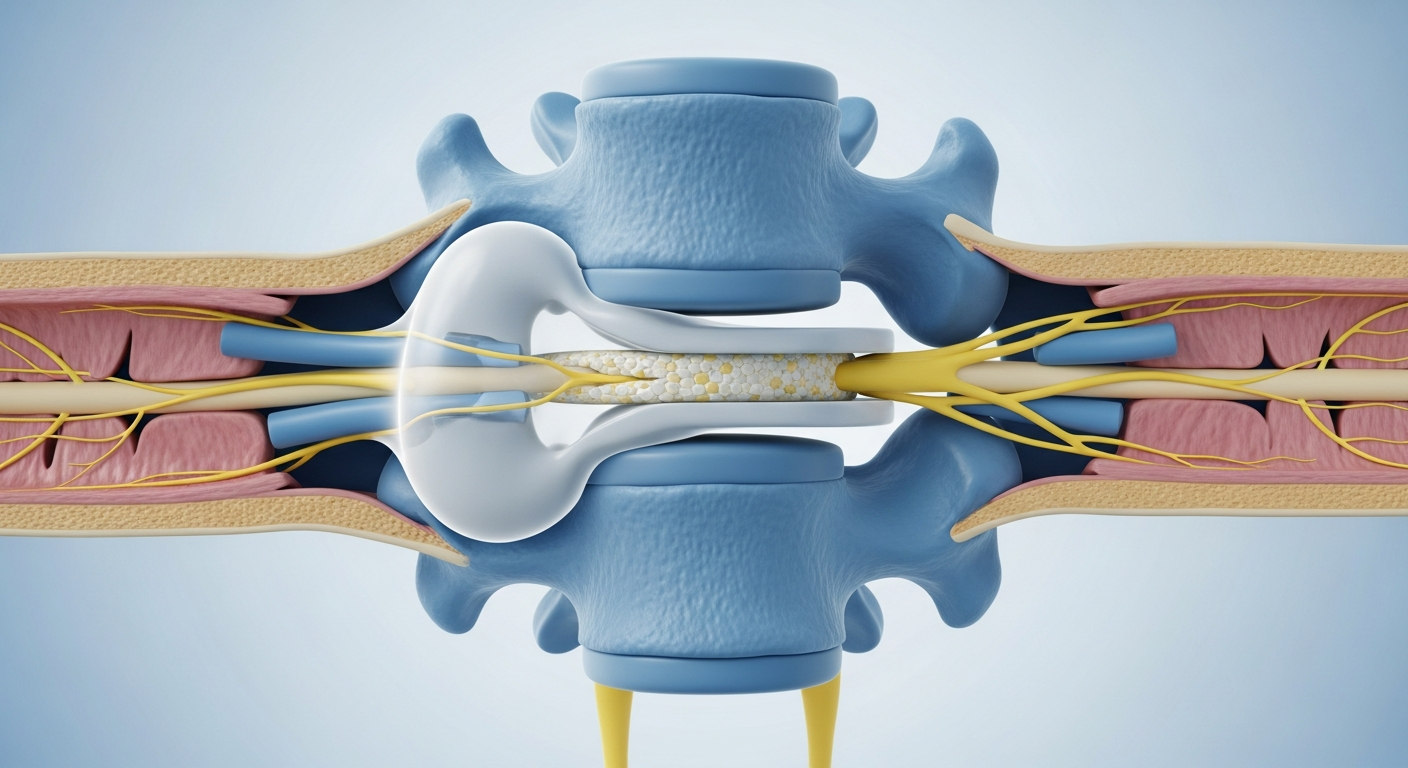
Anatomy of a Spinal Disc
To understand why a herniated disc causes so much pain, it helps to understand how the spine is built. Your spine is made up of individual bones called vertebrae. Between each vertebra is an intervertebral disc. These discs act as shock absorbers, allowing your spine to bend, twist, and carry the weight of your body.
Each disc has two main parts:
- Annulus Fibrosus: The tough, rubbery, flexible outer ring.
- Nucleus Pulposus: The soft, jelly-like center.
How a Herniation Occurs
As we age, or due to repetitive stress (like heavy lifting with poor form), the tough outer ring (annulus) can develop micro-tears. If a tear becomes large enough, the pressure of the spine pushing down can squeeze the jelly-like center (nucleus) through the tear.
When this jelly-like material bulges out of the disc space, it enters the spinal canal or the neural foramen (the small openings where nerve roots exit the spine).
Why a Herniated Disc Causes Sciatica
The lower back (lumbar spine) is where the roots of the sciatic nerve begin. When a disc herniates in this area (most commonly at the L4-L5 or L5-S1 levels), it affects the sciatic nerve in two distinct ways:
- Direct Physical Compression: The protruding disc material physically pinches the nerve root against the bone. This compression disrupts the nerve's ability to transmit signals properly, leading to the sensation of pain, numbness, and tingling running down the leg.
- Chemical Inflammation: The jelly-like core of the disc contains specific proteins that, when released outside the disc, are highly irritating to nerves. This causes profound chemical inflammation of the sciatic nerve root, making it highly sensitive to even minor movements.
Symptoms Specific to a Herniated Disc
While general sciatica symptoms apply, sciatica caused specifically by a herniated disc often features:
- Pain that is noticeably worse when bending forward (flexion).
- Sharp, shooting pain when coughing, sneezing, or bearing down (which increases pressure inside the spinal canal).
- Pain that may improve slightly when walking or standing, but worsens when sitting for prolonged periods.
When to See a Doctor
If a herniated disc causes progressive weakness in your leg (such as foot drop) or if you experience a loss of bowel or bladder control, seek emergency medical care immediately. These are signs of severe nerve compression that may require surgical intervention to prevent permanent damage.
Frequently Asked Questions
Author: WhatIsSciatica.net Editorial Team
Medical Reviewer: Dr. Sarah Jenkins, MD
Last Updated: March 2024
Related Articles
How narrowing of the spinal canal causes radiating leg pain.
Learn how the natural wear and tear of spinal discs leads to pain.
A comprehensive guide to medical treatments available for sciatica.
Recommended Next Steps
Understanding treatment pathways can help guide your relief decisions.