Learn more in our complete guide: Explore all Relief & Self-Care sciatica resources →
Medical Disclaimer
Movement and Stretching for Sciatica: Exercises That Actually Help
Key Takeaways
- Targeted stretching and movement are among the most effective self-care strategies for sciatica.
- The most effective exercises depend on the underlying cause — what helps one person may not help another.
- Core strengthening is essential for long-term sciatica prevention and management.
- Always stop exercises that cause worsening leg pain or increased radiating symptoms.
When sciatica strikes, the instinct to rest makes sense — movement hurts. But research consistently shows that gentle, targeted movement is one of the most powerful tools for sciatica recovery. The right stretches can relieve nerve compression, reduce muscle tension, and promote healing. The wrong ones can make things worse. This guide walks you through evidence-based exercises for sciatica with clear guidance on when and how to use them.
Important: Before starting any exercise program for sciatica, it is recommended to consult with a healthcare provider or physiotherapist to determine which exercises are appropriate for your specific condition. Stop any exercise that causes significant worsening of leg pain or radiating symptoms.
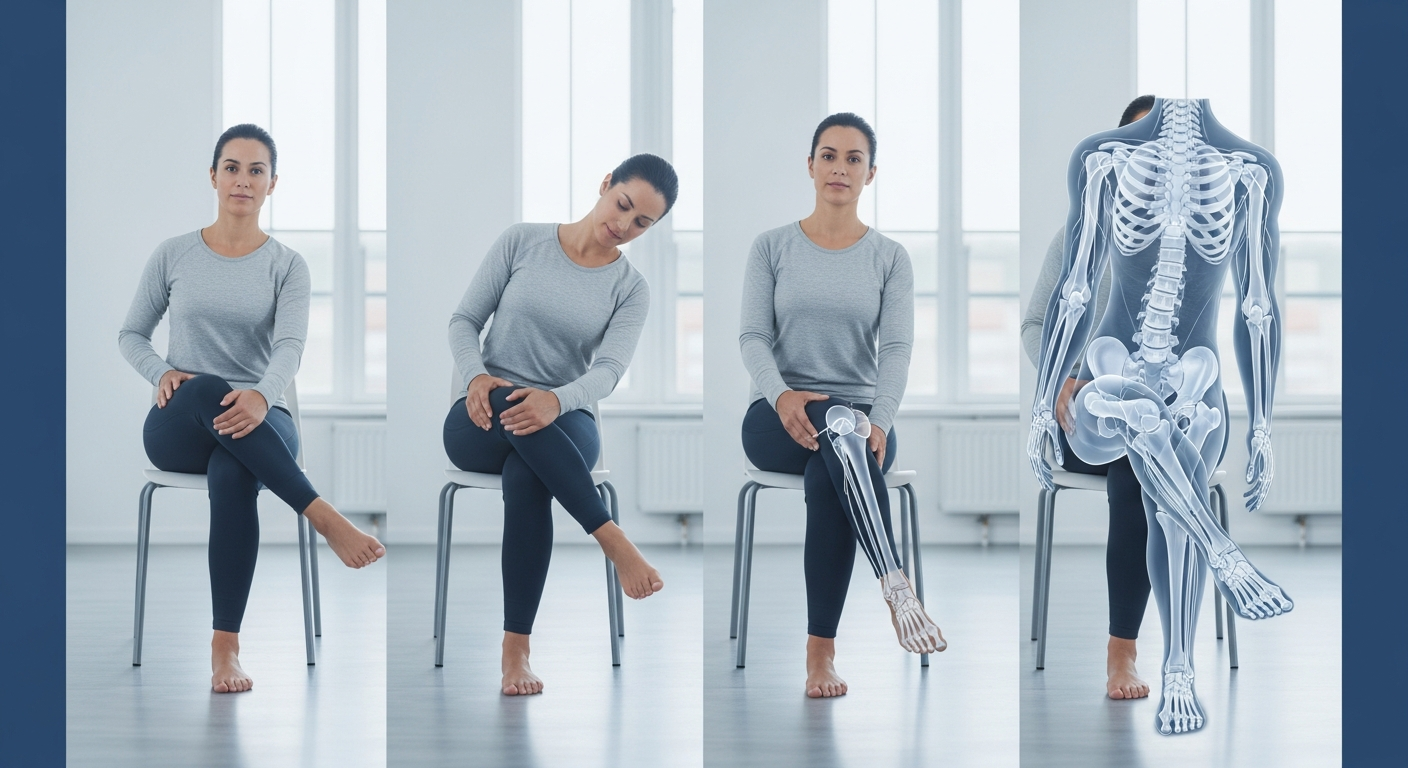
Stretches for Piriformis Syndrome and Buttock Pain
Piriformis Stretch (Supine Figure-4)
Lie on your back with both knees bent and feet flat on the floor. Cross your right ankle over your left thigh, just above the knee. Flex your right foot (toes toward shin). Gently press your right knee away from you. For a deeper stretch, grasp your left thigh with both hands and gently pull it toward your chest. Hold 30-60 seconds. Repeat 3 times on each side, 2-3 times daily.
Hip Flexor Stretch
Kneel on your right knee with your left foot forward. Gently shift your weight forward until you feel a stretch at the front of your right hip. Keep your upper body upright. Hold 30 seconds. This stretches the psoas and iliacus muscles that, when tight, can increase lumbar lordosis and contribute to sciatic nerve tension.
McKenzie Extension Exercises (for Disc Herniation)
These exercises are most effective for disc-related sciatica where symptoms centralize (move toward the back) during extension movements.
Prone Press-Up
Lie face down with hands under your shoulders as if doing a push-up. Keeping your hips on the floor and your lower body relaxed, press your upper body upward with your arms. Go only as far as is comfortable — you may feel tightness but not sharp leg pain. Hold 2-3 seconds, lower, and repeat 10-15 times. If leg pain moves toward your back (centralizes) during this movement, this is a good sign — continue. If pain moves further down the leg, stop.
Flexion Exercises (for Spinal Stenosis)
People with spinal stenosis often find flexion (bending forward) movements provide relief by temporarily widening the spinal canal.
Knee-to-Chest Stretch
Lie on your back. Bend one knee and gently pull it toward your chest with both hands. Hold 20-30 seconds. Repeat with both knees together. Perform 3 times on each side, 2-3 times daily. This gently flexes the lumbar spine, creating space in the spinal canal.
Child's Pose
From kneeling, sit back toward your heels, stretching your arms forward on the floor. Hold 30-60 seconds. This yoga posture is a sustained lumbar flexion stretch that many people with stenosis-related sciatica find deeply relieving.
Core Strengthening for Long-Term Prevention
A strong core — particularly the deep core muscles like the transversus abdominis and multifidus — protects the lumbar spine from the stresses that cause disc herniation and nerve compression.
Dead Bug Exercise
Lie on your back with arms pointing toward the ceiling and both knees bent at 90° in the air. Slowly extend your right arm overhead and left leg toward the floor simultaneously, keeping your lower back pressed to the floor throughout. Return to start and repeat on the opposite side. Start with 5 repetitions per side, building to 10-15 with good form.
Glute Bridges
Lie on your back with knees bent and feet flat. Squeeze your glutes and lift your hips off the floor until your body forms a straight line from shoulders to knees. Hold 2-3 seconds, lower slowly. Repeat 15-20 times. This strengthens the glutes and hamstrings that support the lumbar spine.
Walking: The Underrated Sciatica Exercise
Walking is one of the most underrated exercises for sciatica. It gently loads the spine in a way that promotes disc nutrition through compression-decompression cycles, maintains cardiovascular fitness, and releases endorphins. Start with short walks (5-10 minutes) and gradually increase. Maintain an upright posture and comfortable pace. Many people find that sciatica symptoms temporarily ease after the first few minutes of walking as blood flow increases and muscle stiffness resolves.
When to Seek Medical Care
If exercises consistently worsen your leg pain, or if you develop progressive weakness, numbness, or loss of bladder/bowel control, stop exercising and seek medical evaluation immediately. For best results, work with a qualified physiotherapist who can assess your specific condition and guide your exercise program.
Medically reviewed for accuracy. Last updated: March 2026.
Frequently Asked Questions
Related Articles
Recommended Next Steps
Understanding treatment pathways can help guide your relief decisions.