Learn more in our complete guide: Explore all Relief & Self-Care sciatica resources →
Medical Disclaimer
Yoga for Sciatic Nerve Relief: Best Poses and What to Avoid
Key Takeaways
- Gentle, targeted yoga can significantly reduce sciatica symptoms and improve long-term spinal health.
- Yoga benefits sciatica through improved hip flexibility, core strengthening, stress reduction, and body awareness.
- Certain poses (deep forward folds, intense twists) can worsen disc-related sciatica and should be avoided or modified.
- Working with an experienced yoga therapist who understands sciatica produces the best and safest results.
Yoga's ancient practice of breath-synchronized movement, held postures, and mindful awareness has accumulated an impressive body of modern evidence supporting its role in managing back pain and sciatica. Multiple randomized controlled trials have demonstrated that regular yoga practice reduces pain, improves function, and decreases the need for pain medication in people with chronic low back pain — the category that includes most forms of sciatica.
How Yoga Helps Sciatica
- Hip flexibility: Many yoga poses specifically target the hip flexors, piriformis, and hamstring muscles — tight muscles that directly compress or tension the sciatic nerve. Improved hip flexibility reduces sciatic nerve mechanical stress.
- Core strengthening: Yoga builds functional core strength through planks, boat poses, and stabilization postures, providing better support for the lumbar spine.
- Spinal decompression: Certain yoga poses gently create space within the spinal canal and between vertebrae, temporarily relieving pressure on compressed nerve roots.
- Stress reduction: Yoga's emphasis on breathing and mindfulness activates the parasympathetic nervous system and reduces cortisol — directly addressing the stress-pain amplification cycle relevant to sciatica.
- Body awareness: Regular yoga practice improves proprioception (body position awareness) and movement quality, helping people identify and avoid positions and movements that provoke sciatica.
Yoga Poses Beneficial for Sciatica
Note: These poses are generally helpful but may need modification based on your specific sciatica type. Always work within your pain tolerance and consult a physiotherapist or yoga therapist for personalized guidance.
1. Reclined Pigeon Pose (Supta Kapotasana)
Lying on your back, cross one ankle over the opposite knee (like the piriformis stretch), flex the foot, and gently pull both legs toward your chest. This is a safe, controlled piriformis stretch suitable for most sciatica types.
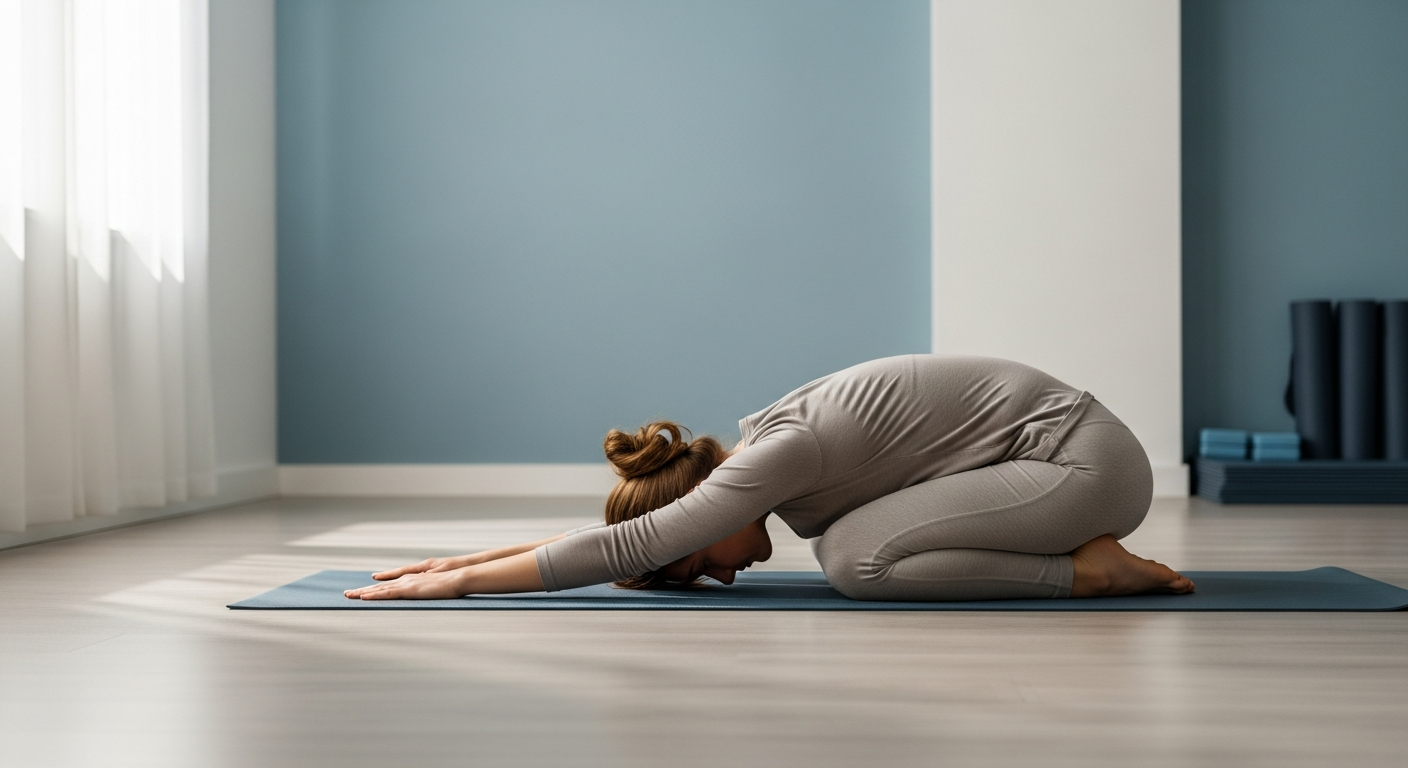
2. Supported Child's Pose (Balasana)
From kneeling, sit back toward the heels and extend arms forward on the floor. A block or bolster under the chest makes this more comfortable. Gently flexes the lumbar spine, relieving stenosis-related compression.
3. Legs Up the Wall (Viparita Karani)
Lie near a wall and extend both legs up vertically. This gently inverts the legs, reducing venous pressure and gravitational disc compression. Many people with sciatica find this pose deeply relieving.
4. Cobra Pose (Bhujangasana)
Lying face down, press up with arms while keeping hips on the floor. A mild version of the McKenzie extension exercise. Helpful for disc-related sciatica where symptoms centralize with extension.
5. Cat-Cow Stretch (Marjaryasana-Bitilasana)
On hands and knees, alternate between arching (cow) and rounding (cat) the spine. This gentle spinal mobilization promotes circulation to spinal discs and maintains segmental mobility.
Yoga Poses to Avoid or Modify with Sciatica
- Seated forward fold (Paschimottanasana): Intense hamstring and sciatic nerve stretch that can worsen disc herniation symptoms. Modify by bending knees and keeping the spine straight rather than rounding.
- Deep twists (Ardha Matsyendrasana): Rotation combined with flexion can increase disc pressure and worsen nerve root compression.
- Full pigeon pose on the floor: The full version with one leg forward and one extended back can be too intense during acute sciatica — use the reclined version instead.
- Standing forward fold (Uttanasana): Particularly with tight hamstrings, this increases lumbar disc pressure significantly. Modify with bent knees and hands on blocks.
- Shoulder stand and headstand: These inversions increase cervical and upper thoracic load and are not appropriate for most people with active sciatica.
Building a Yoga Practice for Sciatica
Start conservatively: 15-20 minutes of gentle yoga, 3-4 times per week. Choose restorative or yin yoga styles initially. As symptoms improve, gradually increase duration and introduce slightly more challenging poses. A yoga for back pain or yoga therapy class with an experienced instructor is the safest starting point.
Medically reviewed for accuracy. Last updated: March 2026.
Frequently Asked Questions
Related Articles
Recommended Next Steps
Understanding treatment pathways can help guide your relief decisions.