Learn more in our complete guide: Explore all Relief & Self-Care sciatica resources →
Medical Disclaimer
Aquatic Therapy for Sciatica: Benefits, Exercises, and Getting Started
Key Takeaways
- Water buoyancy dramatically reduces spinal loading, enabling exercise that would be too painful on land.
- Aquatic therapy is particularly beneficial for obese patients, older adults, and those with severe pain limiting land exercise.
- Warm water provides additional muscle relaxation benefits beyond buoyancy.
- Both recreational water exercise and supervised aquatic physical therapy can benefit sciatica.
For people whose sciatica is so severe that conventional exercise is impossible, or for those who simply don't respond well to land-based therapy, the swimming pool can be transformative. Water's unique physical properties create an environment where the painful, nerve-compressed spine can move, strengthen, and heal with dramatically reduced pain. Aquatic therapy is not a last resort — it is a highly effective and evidence-supported modality that deserves consideration early in sciatica management.
The Physics of Aquatic Therapy
Buoyancy
Water's buoyancy counteracts gravity, significantly reducing the compressive loading on spinal discs. When submerged to the waist, you experience approximately 50% of your normal body weight. At chest depth, body weight is reduced to approximately 25-30%. This dramatically reduces the forces driving nerve compression while still allowing therapeutic movement and muscle strengthening.
Hydrostatic Pressure
Water exerts pressure uniformly on all submerged surfaces. This pressure reduces swelling in inflamed tissues and provides a gentle compression that some patients find relieves nerve pain similar to the way compression garments work for other conditions.
Resistance
Water provides 12-15 times more resistance than air for movement, allowing effective muscle strengthening through low-impact resistance training. Movements that would be joint-damaging with weights on land can be performed safely in water.
Warmth
Therapeutic pools are maintained at 92-96°F (33-36°C) — warmer than recreational pools. This warmth relaxes muscle spasm, increases flexibility of connective tissue, improves circulation, and has direct analgesic effects through thermoreceptor stimulation.
Effective Aquatic Exercises for Sciatica
Water Walking
Simply walking through chest-deep water provides excellent lumbar decompression while maintaining an upright, functional movement pattern. The resistance of water slows movement and makes smaller muscle groups work harder, improving stability and coordination. Begin with 10-15 minutes and gradually increase to 30-45 minutes.
Pool-Based Hip Stretches
Holding the pool wall, perform hip circles and gentle hip flexor stretches. The warm water and buoyancy allow a greater range of motion than land-based stretching. The piriformis stretch can be performed while holding the pool wall for support.
Water Cycling
Using a water bicycle or performing a "bicycle" motion with legs while wearing a flotation vest in deep water allows cardiovascular exercise with virtually zero spinal compression. This is an excellent option for those with severe pain or obesity.
Backstroke Swimming
Backstroke keeps the spine in a relatively neutral position and provides full-body exercise. Many sciatica patients tolerate backstroke well because it avoids the lumbar extension of butterfly or the asymmetric rotation of freestyle.
Pool Core Strengthening
Using pool noodles or water dumbbells, perform exercises that challenge core stability in the buoyancy-assisted environment. Examples include: holding a pool noodle across the back of the shoulders for balance while performing knee lifts, or using the pool wall for support during single-leg balance exercises.
Who Benefits Most from Aquatic Therapy?
While aquatic therapy can benefit most sciatica patients, it is particularly valuable for:
- People with severe pain who cannot exercise on land
- Older adults with multiple joint problems (hips, knees) that limit land exercise
- Obese individuals for whom land exercise is difficult
- People with spinal stenosis who find upright walking uncomfortable
- Post-surgical patients who are cleared for water exercise
Finding Aquatic Therapy
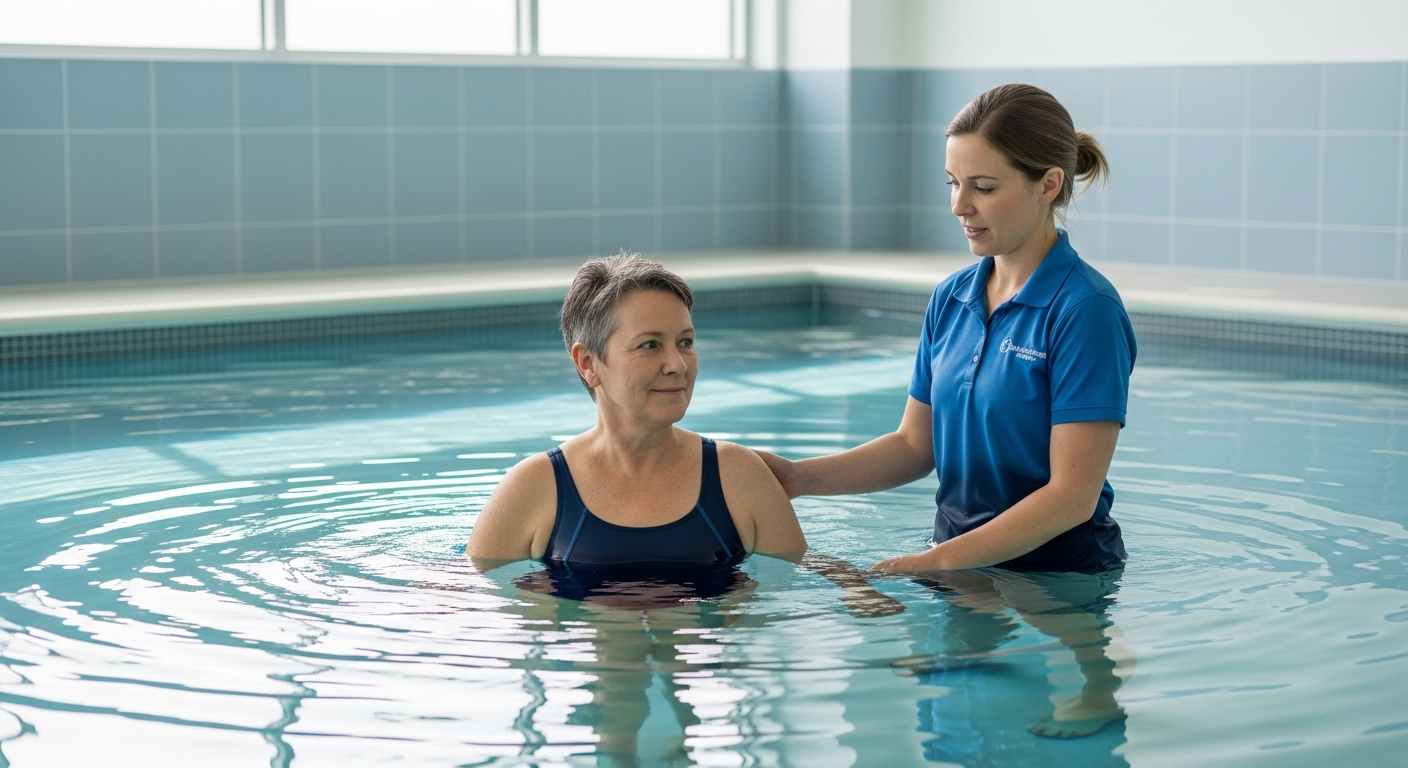
Formal aquatic physical therapy requires a prescription from your physician and takes place in a therapeutic pool under supervision. Many hospitals, rehabilitation centers, and some health clubs offer these services. Recreational water exercise at a health club pool can be a more accessible alternative — ask your physical therapist for guidance on appropriate exercises.
When to Seek Medical Care
While aquatic therapy is generally very safe, avoid swimming pools and submersion if you have open wounds, skin infections, or bowel/bladder incontinence. If symptoms worsen with water exercise or you develop new neurological symptoms, stop and consult your healthcare provider.
Medically reviewed for accuracy. Last updated: March 2026.
Frequently Asked Questions
Related Articles
Recommended Next Steps
Understanding treatment pathways can help guide your relief decisions.