Learn more in our complete guide: Explore all Basics sciatica resources →
Medical Disclaimer
What Is Sciatica? A Comprehensive Overview
Key Takeaways
- Sciatica is not a disease itself, but a symptom of an underlying medical condition.
- It involves pain radiating along the sciatic nerve, typically affecting only one side of the body.
- The most common cause is a herniated disc in the lumbar spine.
- While pain can be severe, most cases resolve with conservative treatment within a few weeks.
Sciatica is one of the most common yet frequently misunderstood forms of back and leg pain. Often described as a sharp, shooting, or burning pain that originates in the lower back and travels down the back of the leg, sciatica can range from a mild annoyance to a debilitating condition that makes standing, sitting, or walking difficult.
Understanding the Sciatic Nerve
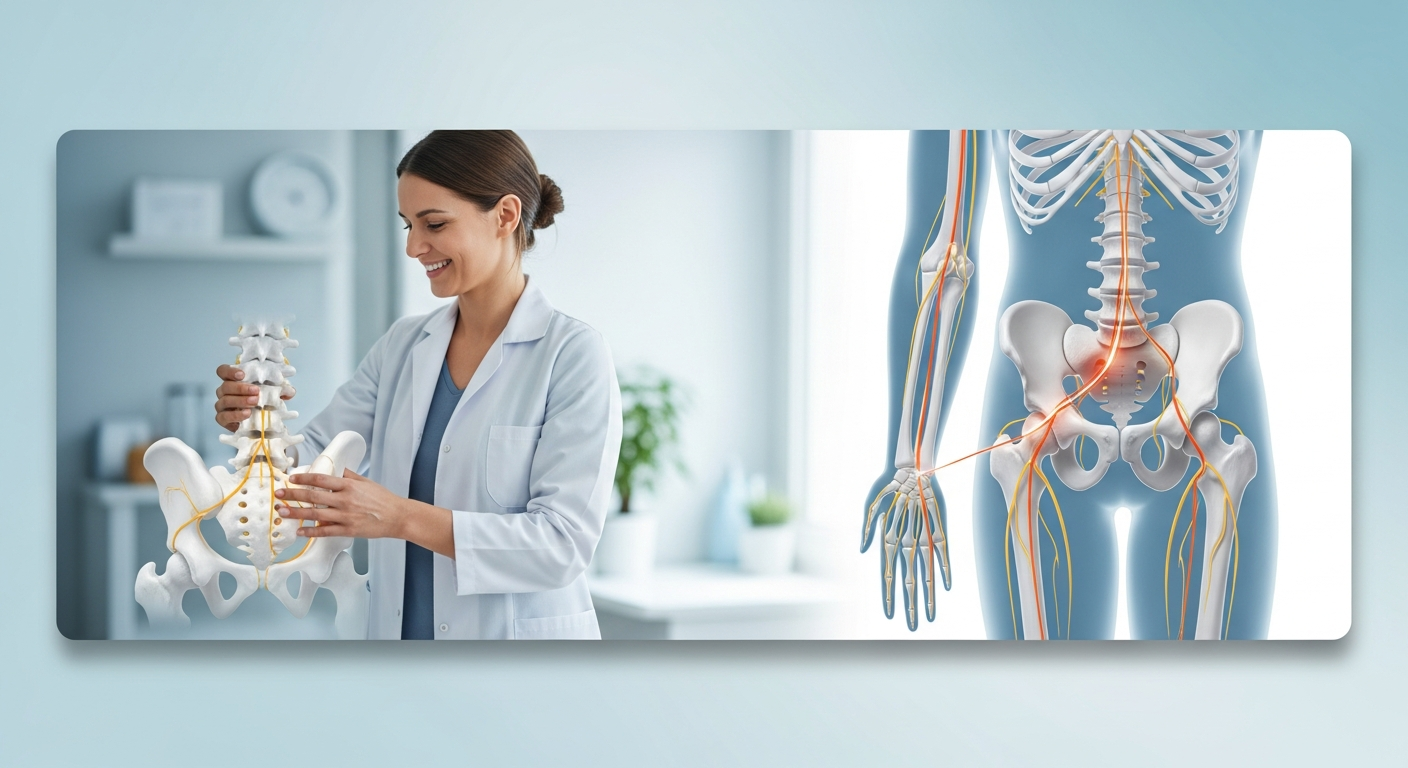
To understand sciatica, you first need to understand the sciatic nerve. It is the longest and thickest nerve in the human body. It begins as a bundle of nerve roots in the lower back (the lumbar spine and sacrum). These roots converge to form the sciatic nerve, which then runs through the deep muscles of the buttocks and down the back of each thigh.
Just above the knee, the sciatic nerve branches into smaller nerves that continue down into the calves, ankles, feet, and toes. Because of its length and complex pathway, any irritation or compression of this nerve can cause symptoms anywhere along its route.
Sciatica is a Symptom, Not a Diagnosis
One of the most important concepts to grasp is that sciatica is a symptom, not a medical diagnosis. When a doctor says you have sciatica, they are describing the type of pain you are experiencing, not the underlying cause of that pain.
Common underlying conditions that produce sciatica symptoms include:
- Herniated Discs: The soft inner core of a spinal disc leaks out and compresses the nerve root.
- Spinal Stenosis: The narrowing of the spinal canal, which puts pressure on the nerves.
- Spondylolisthesis: A condition where one vertebra slips forward over another.
- Piriformis Syndrome: A muscle in the buttocks spasms and pinches the sciatic nerve.
How Common is Sciatica?
Sciatica is incredibly common. According to the National Institutes of Health (NIH), up to 40% of people will experience sciatica at least once in their lifetime. It is most frequent in people between the ages of 30 and 50, and the risk increases with age, occupational stress, and sedentary lifestyle.
When to See a Doctor
You should seek immediate medical attention if you experience:
- Sudden, severe pain in your lower back or leg
- Numbness or muscle weakness in your leg or foot
- Pain following a violent injury, such as a traffic accident
- Trouble controlling your bowels or bladder (Cauda Equina Syndrome)
Frequently Asked Questions
Author: WhatIsSciatica.net Editorial Team
Medical Reviewer: Dr. Sarah Jenkins, MD
Last Updated: March 2024
References
- Mayo Clinic. (2023). Sciatica - Symptoms and causes. Retrieved from https://www.mayoclinic.org/diseases-conditions/sciatica/symptoms-causes/syc-20377435
- National Institute of Neurological Disorders and Stroke (NIH). Low Back Pain Fact Sheet.
- American Academy of Orthopaedic Surgeons (AAOS). Sciatica.
Related Articles
From a dull ache to a sharp, burning sensation, understand the wide range of symptoms.
A herniated disc is the leading cause of sciatica. Understand how it occurs.
A comprehensive guide to medical treatments available for sciatica.
Recommended Next Steps
Understanding treatment pathways can help guide your relief decisions.