Learn more in our complete guide: Explore all Causes sciatica resources →
Medical Disclaimer
Lumbar Spinal Stenosis: When the Spinal Canal Narrows
Key Takeaways
- Spinal stenosis is the abnormal narrowing of the bony canal that houses the spinal nerves.
- It is a common cause of sciatica in adults over the age of 60.
- Pain typically worsens when standing or walking and improves when sitting or leaning forward.
- It is primarily caused by natural aging processes, including osteoarthritis and bone spurs.
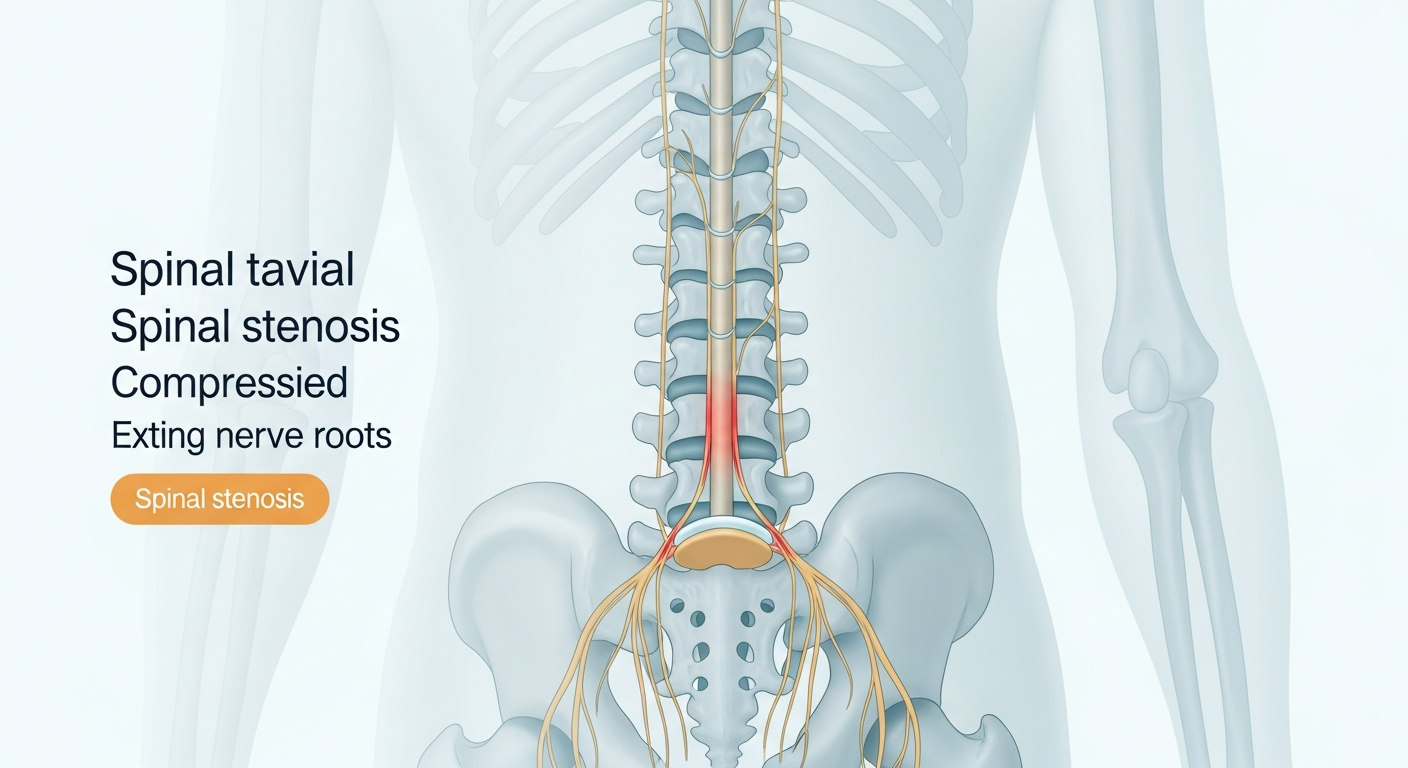
While a herniated disc is the most common cause of sciatica in younger and middle-aged adults, lumbar spinal stenosis becomes a leading culprit as we age, particularly in those over 60. To understand stenosis, you must visualize the spine as a protective tunnel for your nervous system.
What is Spinal Stenosis?
"Stenosis" is a medical term meaning the abnormal narrowing of a body channel. In the case of lumbar spinal stenosis, the open spaces within the lower spine begin to narrow.
This narrowing can happen in the central spinal canal (where the spinal cord or cauda equina nerve bundle runs) or in the neural foramina (the small side openings where individual nerve roots exit the spine). When this space shrinks, it "chokes" or pinches the sciatic nerve roots, resulting in the classic radiating leg pain of sciatica.
What Causes the Canal to Narrow?
Spinal stenosis is almost always the result of osteoarthritis and the natural wear-and-tear of aging. Key contributing factors include:
- Bone Spurs (Osteophytes): As spinal discs wear down, the vertebrae can rub against each other. In response to this friction, the body attempts to heal itself by growing new bone, creating bone spurs that protrude into the spinal canal.
- Thickened Ligaments: The ligaments that hold the spine together can become stiff, thick, and enlarged over time, bulging into the canal space.
- Bulging Discs: Degenerated discs can flatten and bulge backward into the canal.
The "Shopping Cart" Sign: Unique Symptoms of Stenosis
Sciatica caused by spinal stenosis often presents differently than sciatica caused by a herniated disc. The hallmark symptom of lumbar stenosis is neurogenic claudication.
Patients typically experience a heavy, aching, or cramping pain in the legs, calves, or buttocks that:
- Worsens with upright posture: Standing up straight or walking extends the spine, which further narrows the spinal canal and pinches the nerves.
- Improves with forward flexion: Bending forward (like leaning on a shopping cart or using a walker) opens up the spinal canal, temporarily relieving the pressure on the nerves.
- Is relieved by sitting: Sitting down immediately widens the spinal spaces and relieves the pain.
When to See a Doctor
Because stenosis is a progressive condition, it usually worsens slowly over time. However, if you experience sudden, severe weakness in your legs, or if you lose the ability to control your bladder or bowels, seek emergency medical care, as the nerve bundle may be critically compressed.
Frequently Asked Questions
Author: WhatIsSciatica.net Editorial Team
Medical Reviewer: Dr. Sarah Jenkins, MD
Last Updated: March 2024
Related Articles
How age impacts spinal health and increases the risk of sciatica.
Recommended Next Steps
Understanding treatment pathways can help guide your relief decisions.