Learn more in our complete guide: Explore all Causes sciatica resources →
Medical Disclaimer
Smoking and Sciatica: How Cigarettes Harm Your Spine and Sciatic Nerve
Key Takeaways
- Smoking is an independent, well-established risk factor for lumbar disc disease and sciatica.
- Nicotine causes blood vessel constriction that starves spinal discs of nutrients, accelerating their degeneration.
- Smokers have worse sciatica outcomes and slower recovery than non-smokers.
- Quitting smoking is one of the most impactful changes you can make for your spinal health.
The harmful effects of smoking on the heart and lungs are well known, but fewer people realize that smoking is also a significant risk factor for back pain and sciatica. Research consistently demonstrates that smokers have higher rates of disc degeneration, herniated discs, and sciatica compared to non-smokers — and the damage begins earlier and progresses faster.
How Smoking Damages Spinal Discs
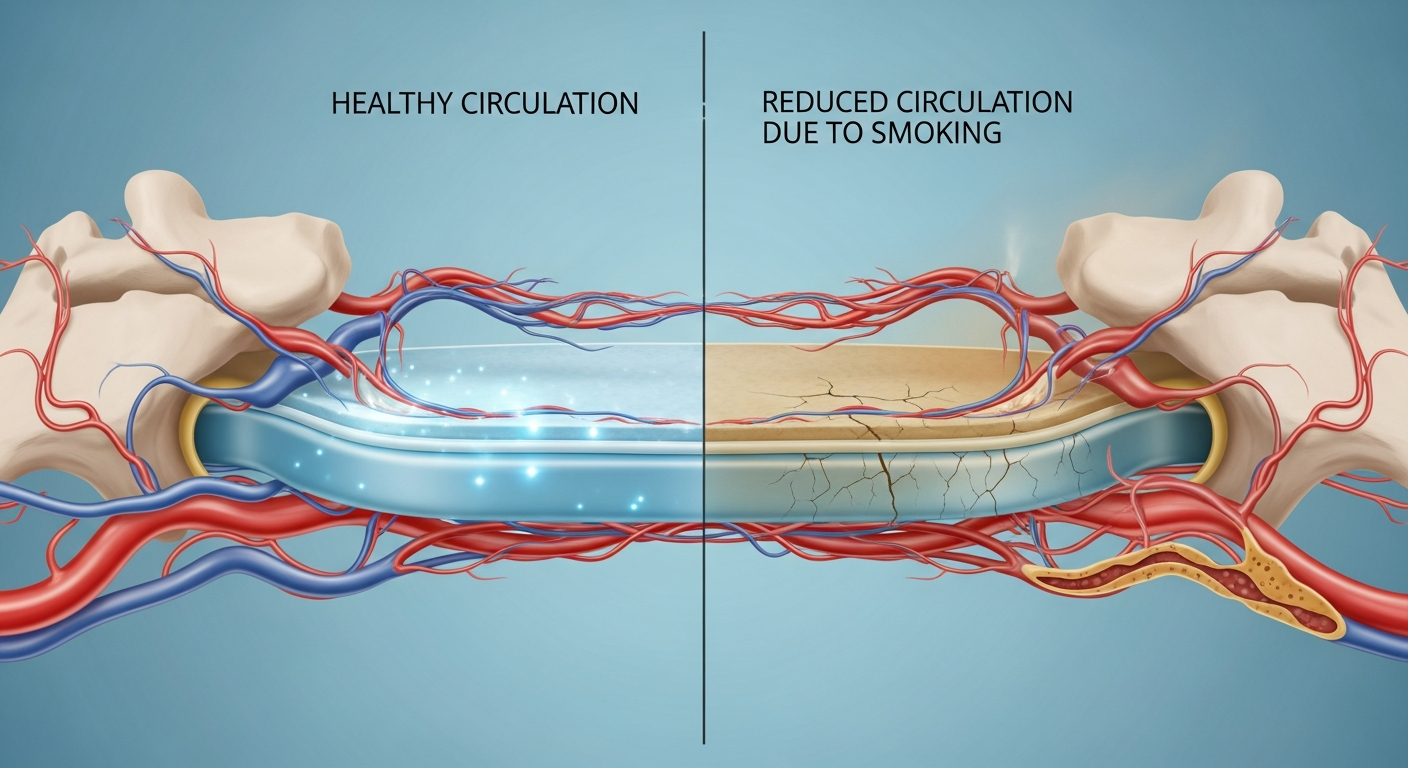
Spinal intervertebral discs are avascular — meaning they have no direct blood supply of their own. They rely entirely on nutrients diffusing in from nearby blood vessels. This makes them particularly vulnerable to any reduction in blood flow.
Nicotine is a potent vasoconstrictor — it causes blood vessels throughout the body to narrow. This reduction in blood flow to the small vessels near the discs impairs the critical nutrient diffusion that keeps discs healthy. Over time, discs starved of nutrients lose their water content, become brittle, and are prone to tearing, bulging, and herniation.
Additionally, carbon monoxide in cigarette smoke binds to hemoglobin (the oxygen-carrying protein in red blood cells) more avidly than oxygen does. This reduces the oxygen-carrying capacity of the blood, further impairing tissue oxygenation — including the oxygen supply to nerve tissue and the small vessels that supply the spine.
Smoking and Inflammation
Smoking promotes systemic inflammation through multiple pathways. It increases circulating levels of pro-inflammatory cytokines and promotes oxidative stress. In the context of spinal disc disease, this inflammatory environment accelerates disc deterioration and can directly sensitize nerve tissue, lowering the pain threshold.
Research has also shown that smokers have elevated levels of matrix metalloproteinases (MMPs) — enzymes that break down the collagen structural matrix of disc tissue. Higher MMP levels directly correlate with faster disc degeneration.
Smoking and Sciatica Outcomes
The impact of smoking extends beyond causing sciatica — it also worsens outcomes once sciatica develops:
- Smokers with disc herniation have higher pain scores and slower recovery than non-smokers
- Surgical outcomes for spinal procedures are significantly worse in smokers
- Rates of post-surgical complications, including infection and poor wound healing, are elevated in smokers
- Spinal fusion surgery has substantially lower success rates in smokers (fusion is impaired because bone healing requires good blood supply)
The Good News: Quitting Helps
While smoking cannot reverse existing structural disc damage, quitting smoking slows further deterioration and improves the environment for healing. Studies have found that ex-smokers have lower rates of back pain and sciatica than current smokers, and improvements in pain levels have been documented after smoking cessation. If surgery becomes necessary, quitting before the procedure significantly improves outcomes.
Talk to your healthcare provider about smoking cessation resources. Options include nicotine replacement therapy, prescription medications like varenicline or bupropion, and behavioral counseling programs — all of which significantly increase quit success rates compared to quitting "cold turkey" alone.
When to Seek Medical Care
If you are a smoker experiencing progressive leg weakness, numbness, or loss of bladder/bowel control, seek immediate medical care. Smokers with sciatica who need surgery should discuss smoking cessation with their surgeon well in advance of any planned procedure to optimize outcomes.
Medically reviewed for accuracy. Last updated: March 2026.
References
- Kauppila, L.I. (2009). Atherosclerosis and disc degeneration/low-back pain — a systematic review. European Journal of Vascular and Endovascular Surgery.
- Shiri, R., et al. (2010). The association between smoking and low back pain: a meta-analysis. The American Journal of Medicine.
- Battié, M.C., et al. (1991). Smoking and lumbar intervertebral disc degeneration: an MRI study of identical twins. Spine.
Frequently Asked Questions
Related Articles
Recommended Next Steps
Understanding treatment pathways can help guide your relief decisions.