Learn more in our complete guide: Explore all Causes sciatica resources →
Medical Disclaimer
Sitting and Sciatica: How Prolonged Sitting Affects the Sciatic Nerve
Key Takeaways
- Prolonged sitting significantly increases pressure on lumbar discs, contributing to disc herniation and sciatica.
- Slouched sitting posture is particularly harmful, increasing disc pressure by over 200% compared to lying down.
- Taking movement breaks every 30-45 minutes is one of the most important strategies for desk workers with sciatica.
- Ergonomic improvements — proper chair height, lumbar support, monitor height — substantially reduce sitting-related spinal stress.
Modern life has made us a sitting species. The average American spends 6-8 hours per day seated — at desks, in cars, and on sofas. For the lumbar spine and sciatic nerve, this is profoundly unnatural. The human body evolved for movement, and the spinal structures responsible for protecting the sciatic nerve are poorly designed to handle hours of static sitting load. For the millions who already have sciatica, this creates a painful daily challenge.
The Science of Sitting: What Happens to Your Discs
Classic research by Dr. Alf Nachemson measured intradiscal pressure (pressure inside the lumbar discs) in various positions. His findings were illuminating:
- Lying on your back: approximately 25 units of pressure
- Standing: approximately 100 units
- Sitting upright with lumbar support: approximately 100-110 units
- Sitting without lumbar support (slouched): approximately 140-180 units
- Sitting and leaning forward: approximately 185-275 units
This demonstrates that unsupported, slouched sitting — the most common natural sitting position — is one of the highest-pressure states for the lumbar spine. This sustained pressure compresses the posterior disc (the part most prone to herniation) and impairs the diffusion of nutrients into the disc.
Sitting and the Piriformis Muscle
Beyond disc pressure, prolonged sitting also compresses the piriformis muscle — the deep buttock muscle through which (or near which) the sciatic nerve passes. Hard, prolonged sitting on a firm surface directly compresses the piriformis, causing it to become tight and inflamed. In susceptible individuals, this can cause piriformis syndrome — a non-spinal cause of sciatica-like symptoms.
People who sit on their wallets (creating an uneven sitting surface that tilts the pelvis) are particularly at risk for piriformis-related sciatic pain.
The Long-Haul Driver Problem
Professional drivers face a particularly challenging combination of prolonged sitting, vehicle vibration, and awkward postures. Truck drivers, for example, have significantly elevated rates of lumbar disc disease and sciatica compared to the general population. Vehicle vibration is transmitted through the seat to the spine, creating repetitive micro-trauma to the discs at specific resonant frequencies that are especially damaging to spinal tissue.
Practical Strategies for Sitters with Sciatica
The 30-Minute Rule
Set a timer to stand up and move for 2-5 minutes every 30-45 minutes. Even a brief walk around the office or a set of gentle standing stretches helps restore disc nutrition and reduces muscle fatigue.
Ergonomic Chair Setup
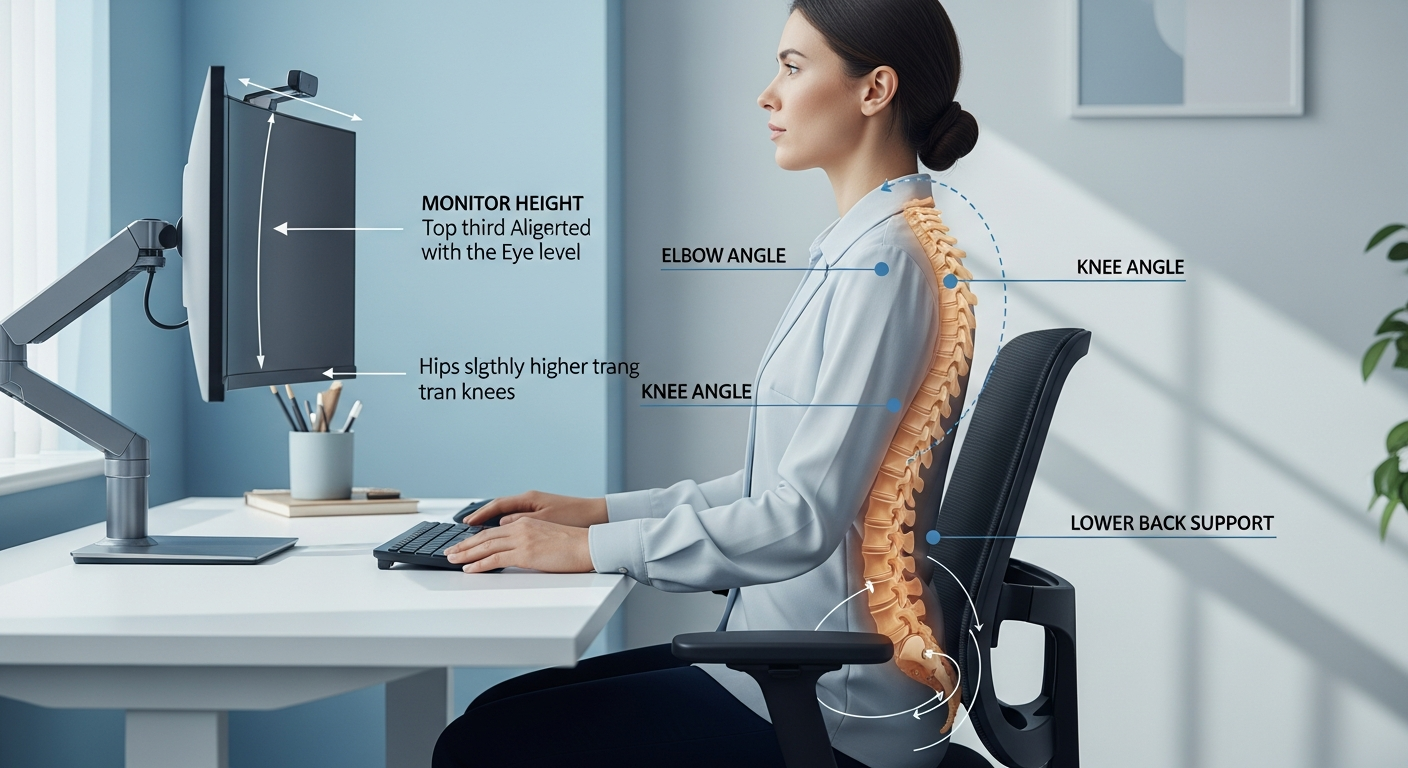
Adjust your chair so your feet rest flat on the floor (or use a footrest), your knees are at or slightly below hip level, and your lower back is supported with an ergonomic chair or lumbar cushion. Your monitor should be at eye level to prevent forward head posture that increases spinal loading.
Lumbar Support
A lumbar support cushion or rolled towel placed in the small of your back while sitting can maintain natural lumbar lordosis (the inward curve of the lower back), significantly reducing disc pressure compared to unsupported sitting.
Sit-Stand Desks
Height-adjustable desks allow you to alternate between sitting and standing throughout the day. Research shows that office workers who use sit-stand desks report less back and leg pain and greater productivity.
When to Seek Medical Care
If sitting triggers or worsens significant leg pain, numbness, or weakness, see a healthcare provider for evaluation. These symptoms may indicate nerve compression that requires specific treatment beyond ergonomic changes.
Medically reviewed for accuracy. Last updated: March 2026.
Frequently Asked Questions
Related Articles
Recommended Next Steps
Understanding treatment pathways can help guide your relief decisions.