Learn more in our complete guide: Explore all Relief & Self-Care sciatica resources →
Medical Disclaimer
Back Brace for Sciatica: Do They Help and Which Should You Choose?
Key Takeaways
- Back braces can provide short-term sciatica pain relief by limiting painful movements.
- They are best used temporarily during acute flares or for specific demanding activities, not as long-term solutions.
- Prolonged brace use without exercise can weaken core muscles, potentially worsening long-term outcomes.
- No brace addresses the underlying cause of sciatica — active rehabilitation is always needed.
When sciatica pain is severe, the appeal of a supportive back brace is entirely understandable. A brace promises stability, support, and the ability to keep moving through daily life with less pain. But the reality of back braces for sciatica is nuanced — they can genuinely help in specific circumstances, but can also be counterproductive if used incorrectly or relied upon long-term.
How Back Braces Help Sciatica
Back braces work through several mechanisms to reduce sciatica pain:
- Motion limitation: Braces restrict the range of lumbar movement, preventing positions and movements (like forward bending) that increase disc pressure and worsen nerve compression.
- Posture support: Rigid and semi-rigid braces maintain the lumbar spine in a neutral position, reducing the asymmetric loading that can occur with poor posture.
- Intra-abdominal pressure: Abdominal compression from the brace increases intra-abdominal pressure, which acts like an internal splint that reduces lumbar disc loading by approximately 20-30%.
- Proprioceptive feedback: The physical sensation of the brace against the skin provides proprioceptive cues that prompt better posture awareness throughout the day.
- Psychological reassurance: For some patients, the feeling of physical support from a brace reduces fear-avoidance behavior and encourages more activity — which overall benefits recovery.
Types of Back Braces for Sciatica
Lumbar Support Belts (Soft/Elastic)
These lightweight elastic bands wrap around the lower back and abdomen. They provide mild support and compression but limit little actual spinal motion. They are comfortable for extended wear and suitable for activity modification rather than significant spinal stabilization.
Lumbosacral Corsets
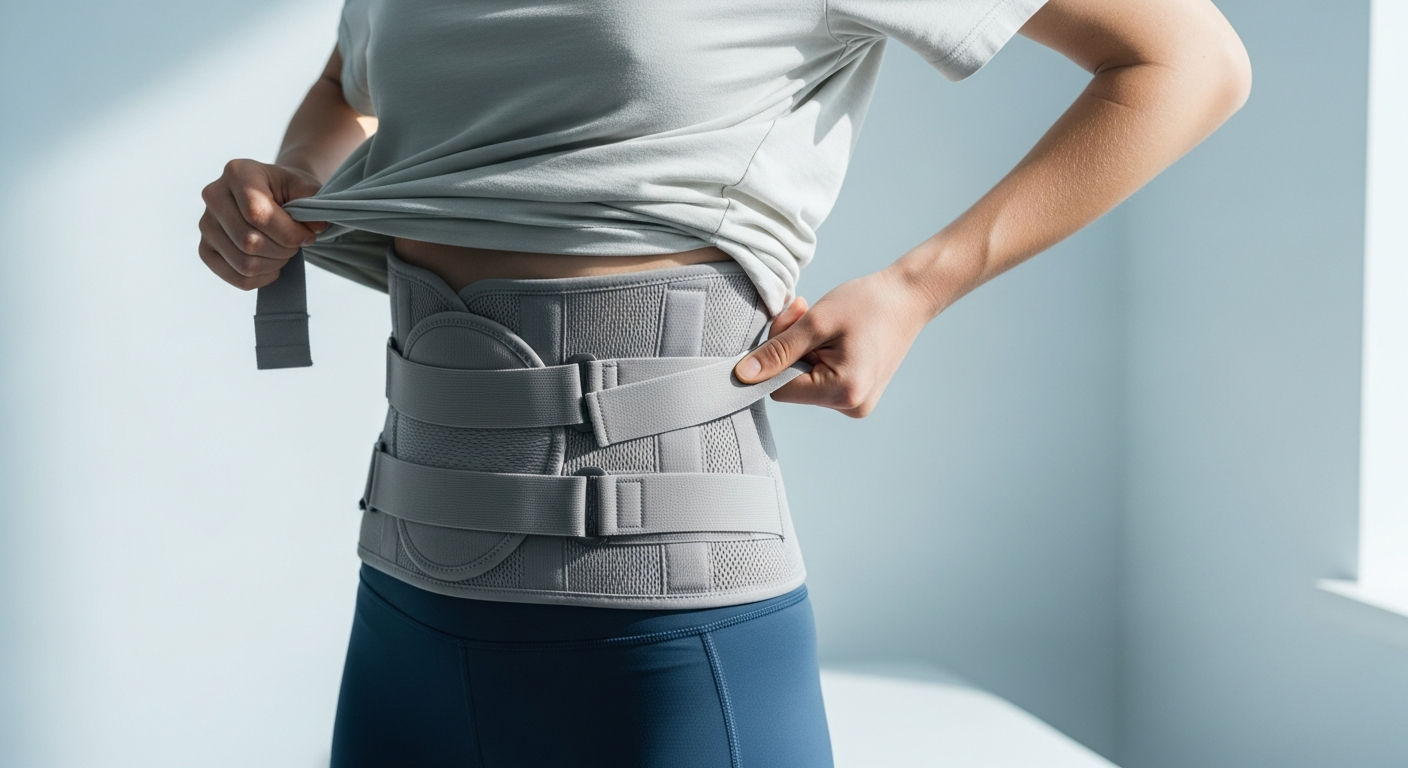
Canvas or neoprene corsets with metal or plastic stays (inserts) provide intermediate support. The stays can be molded to your body contour. They limit movement more effectively than soft belts while still allowing bending for daily activities. Often prescribed after disc herniation.
Rigid Lumbar Orthoses (TLSO)
Rigid braces made of hard plastic significantly restrict lumbar motion. These are typically used post-surgically or for spinal fractures. They are generally not prescribed for typical sciatica management.
The Risks of Long-Term Brace Use
The core muscles that support the lumbar spine function much less when a brace is worn — the brace takes over their stabilizing role. If a brace is worn continuously for weeks or months without concurrent exercise, these muscles atrophy (weaken). When the brace is eventually removed, the unsupported spine may be more vulnerable to injury than before brace use began.
For this reason, most spine specialists recommend:
- Using braces for targeted activities (lifting, prolonged standing) rather than continuously
- Always combining brace use with an active core strengthening program
- Gradually weaning off the brace as core strength and pain allow
- Not becoming psychologically dependent on the brace for pain management
Best Practices for Using a Back Brace with Sciatica
- Use it during activities that provoke pain (heavy lifting, extended walking)
- Remove it during rest periods to allow muscle activity
- Always perform prescribed core exercises without the brace
- Ensure proper fit — too loose provides no benefit; too tight can restrict breathing and circulation
- Limit use to a few hours per day unless specifically directed otherwise by your physician
- Consider a brace fitting from a physical therapist or orthotist who can ensure proper sizing and positioning
When to Seek Medical Care
If your sciatica is severe enough that you feel you need a brace at all times, consult a healthcare provider. This level of pain and functional limitation typically warrants medical evaluation, possible imaging, and more targeted treatment planning beyond what a back brace alone can provide.
Medically reviewed for accuracy. Last updated: March 2026.
Frequently Asked Questions
Related Articles
Recommended Next Steps
Understanding treatment pathways can help guide your relief decisions.