Learn more in our complete guide: Explore all Basics sciatica resources →
Medical Disclaimer
Common Causes of Sciatica
Key Takeaways
- Sciatica is caused by compression or irritation of the sciatic nerve or its nerve roots.
- A herniated lumbar disc is the most common cause of sciatica.
- Spinal stenosis and degenerative disc disease are frequent causes in older adults.
- Identifying the exact cause is crucial for determining the right treatment plan.
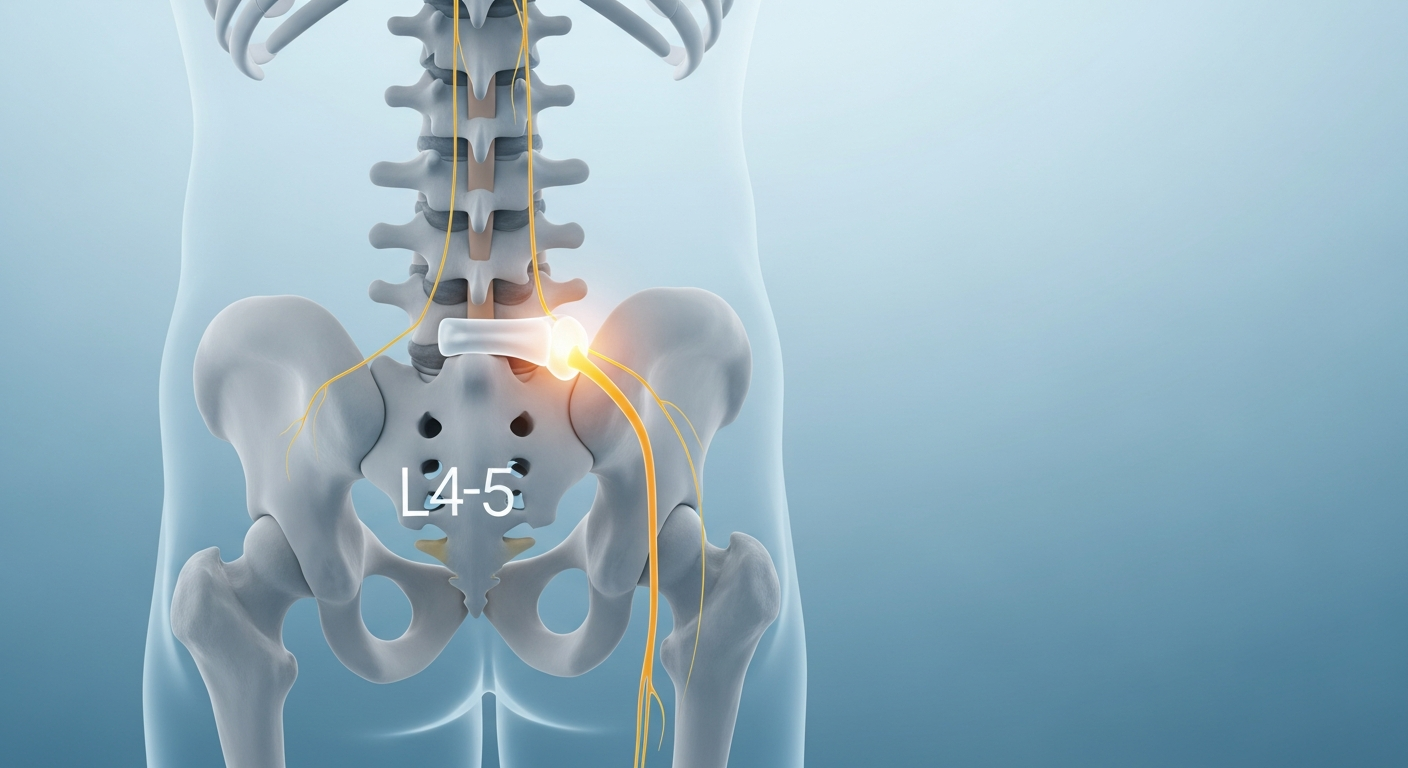
Sciatica is a symptom, not a disease. Therefore, to effectively treat sciatic nerve pain, a doctor must first identify what is causing the nerve compression. Most causes are structural issues within the lumbar (lower) spine.
1. Herniated Disc (The Most Common Cause)
Up to 90% of sciatica cases are caused by a herniated (slipped or ruptured) disc in the lumbar spine. Spinal discs act as cushions between the vertebrae. They have a tough, fibrous exterior and a soft, jelly-like interior.
Due to age, wear-and-tear, or acute injury, the tough exterior can tear, allowing the jelly-like interior to leak out (herniate). This material can directly press against the adjacent sciatic nerve root. Furthermore, the leaked inner material contains acidic chemical irritants that cause severe nerve inflammation.
2. Lumbar Spinal Stenosis
Spinal stenosis is the narrowing of the spinal canal (the bony tube where the spinal cord and nerve roots run). This narrowing is typically caused by osteoarthritis, overgrowth of bone (bone spurs), or thickened ligaments.
As the space narrows, it can "choke" or compress the sciatic nerve roots. This condition is most common in adults over the age of 60. A hallmark symptom of stenosis is that the sciatic pain is often worsened by standing or walking and relieved by sitting or leaning forward (like leaning on a shopping cart).
3. Degenerative Disc Disease
As we age, our spinal discs naturally lose water content, becoming flatter, less flexible, and less capable of acting as shock absorbers. This process is called degenerative disc disease. As the discs flatten, the space between the vertebrae shrinks, which can pinch the exiting nerve roots.
4. Spondylolisthesis
This is a condition where one vertebra slips forward over the vertebra below it. This slippage alters the alignment of the spine and can compress the nerve root exiting the spine at that level. It is often linked to degenerative changes or a stress fracture (spondylolysis) in the spine.
5. Piriformis Syndrome
The piriformis is a small muscle located deep in the buttocks. The sciatic nerve runs right beneath (and sometimes directly through) this muscle. If the piriformis muscle spasms, tightens, or becomes inflamed, it can compress the sciatic nerve, mimicking the symptoms of true spinal sciatica.
Less Common Causes
- Pregnancy: Weight gain, a shift in center of gravity, and hormonal changes that loosen ligaments can place excess pressure on the sciatic nerve.
- Spinal Tumors: Rarely, tumors can grow in the spinal canal and compress the sciatic nerve.
- Infection or Injury: A severe pelvic fracture or spinal infection can damage the nerve.
When to See a Doctor
If your sciatica is accompanied by a high fever, unexplained weight loss, or if the pain is the result of a violent trauma, seek medical care immediately. These could be signs of a spinal infection, tumor, or severe fracture.
Frequently Asked Questions
Author: WhatIsSciatica.net Editorial Team
Medical Reviewer: Dr. Sarah Jenkins, MD
Last Updated: March 2024
Related Articles
How narrowing of the spinal canal causes radiating leg pain.
When buttock muscles compress the sciatic nerve.
Recommended Next Steps
Understanding treatment pathways can help guide your relief decisions.