Learn more in our complete guide: Explore all Basics sciatica resources →
Medical Disclaimer
Sciatica vs. General Back Pain: How to Tell the Difference
Key Takeaways
- General back pain stays localized to the back; sciatica travels down the leg.
- Back pain is usually muscular (aching, stiff); sciatica is neurological (sharp, burning, tingling).
- Sciatica pain is often more severe in the leg than in the back itself.
- Treatments for muscular back pain (like heavy resting) can sometimes worsen sciatica.
Almost everyone experiences lower back pain at some point in their lives. However, many people mistakenly label any severe back pain as "sciatica." While both conditions involve the lower back, they have completely different underlying causes and require different treatment approaches.
Location: Where is the Pain?
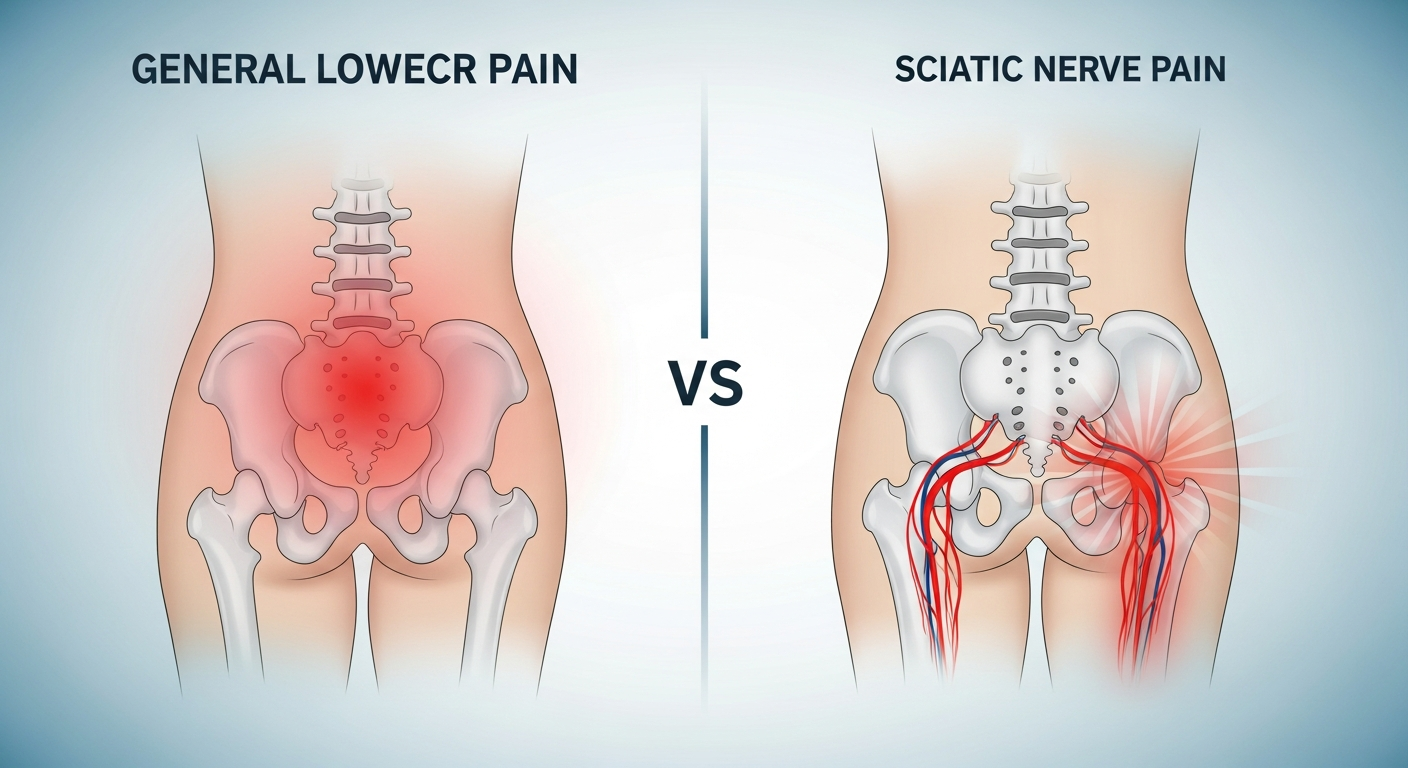
The most reliable way to distinguish between the two is the location and travel path of the pain.
- General Back Pain: The pain is localized to the lower back. It might spread slightly to the upper buttocks or hips, but it rarely travels down past the buttock fold.
- Sciatica: The pain originates in the lower back or buttock but actively radiates down the back of the thigh, calf, and sometimes into the foot. In many cases of sciatica, the leg pain is actually much more severe than the back pain.
Type of Pain: Muscular vs. Neurological
The quality of the pain also provides a strong clue to its origin.
Muscular Back Pain (Strain/Sprain):
- Feels like a dull, heavy ache.
- The back feels stiff, tight, or tender to the touch.
- Pain worsens with movement and improves significantly with rest.
- Usually caused by lifting something heavy, sudden movements, or poor posture.
Sciatica (Nerve Pain):
- Feels sharp, searing, burning, or like an electric shock.
- Accompanied by neurological symptoms: tingling ("pins and needles"), numbness, or weakness in the leg or foot.
- Often worsened by prolonged sitting, coughing, or sneezing.
- Often caused by structural issues like a herniated disc compressing a nerve root.
Why the Difference Matters
Distinguishing between a muscular back strain and sciatica is crucial because the treatments differ. For a muscular strain, rest and applying heat to the lower back can be highly effective. For sciatica, prolonged rest can cause muscles to stiffen and worsen nerve compression; targeted movement, nerve glides, and sometimes anti-inflammatory treatments are required.
When to See a Doctor
Whether it's back pain or sciatica, seek medical care if your pain:
- Follows a severe trauma (like a fall or car accident)
- Is accompanied by unexplained weight loss or fever
- Includes loss of bowel or bladder control
- Causes profound weakness in your legs
Frequently Asked Questions
Author: WhatIsSciatica.net Editorial Team
Medical Reviewer: Dr. Sarah Jenkins, MD
Last Updated: March 2024
Related Articles
Understand the wide range of symptoms that characterize sciatic nerve compression.
Learn the 'red flag' symptoms of sciatica that require immediate attention.
Recommended Next Steps
Understanding treatment pathways can help guide your relief decisions.